The Coffee

The Mill

From cherry to green coffee, in an ecological mill with history.

The mill is where the harvested cherry is transformed into the green coffee we export to the world. The Culpan mill was built in the 1940s, in the time of Roberto Toledo, and has been updated to be ecological, uniting the experience of generations with respect for the environment.

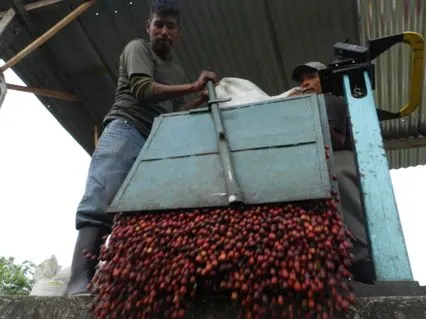
A worker unloading coffee cherries into the Culpan pulper

The wet mill

After the harvest, the coffee arrives at the mill. Here the selected cherries are first separated by density, which makes it possible to set aside the highest-quality beans. They are then peeled by machines called "pulperos", which remove the pulp of the cherry, and the bean is placed in water for a controlled fermentation.

After fermentation, the coffee is washed and separated again by density. It then rests for 24 hours in water tanks. The coffee is afterwards dried on sun patios and in dryers called "Guardiolas" until it reaches between 10.5% and 11.5% humidity; depending on the client, the drying may be done entirely on patios. Once dry, the coffee is stored until the time comes to prepare it for shipping.
The dry mill

To prepare the green coffee for export, the coffee moves to the dry mill. There it is hulled in machines that remove the parchment still wrapping the bean, revealing the green coffee.

The coffee is then classified by density and size, and it passes through a manual checking point where any beans that do not meet our standard are set aside. Samples are taken and cupped to confirm the quality of each lot and, once approved, the green coffee is shipped to the buyer.

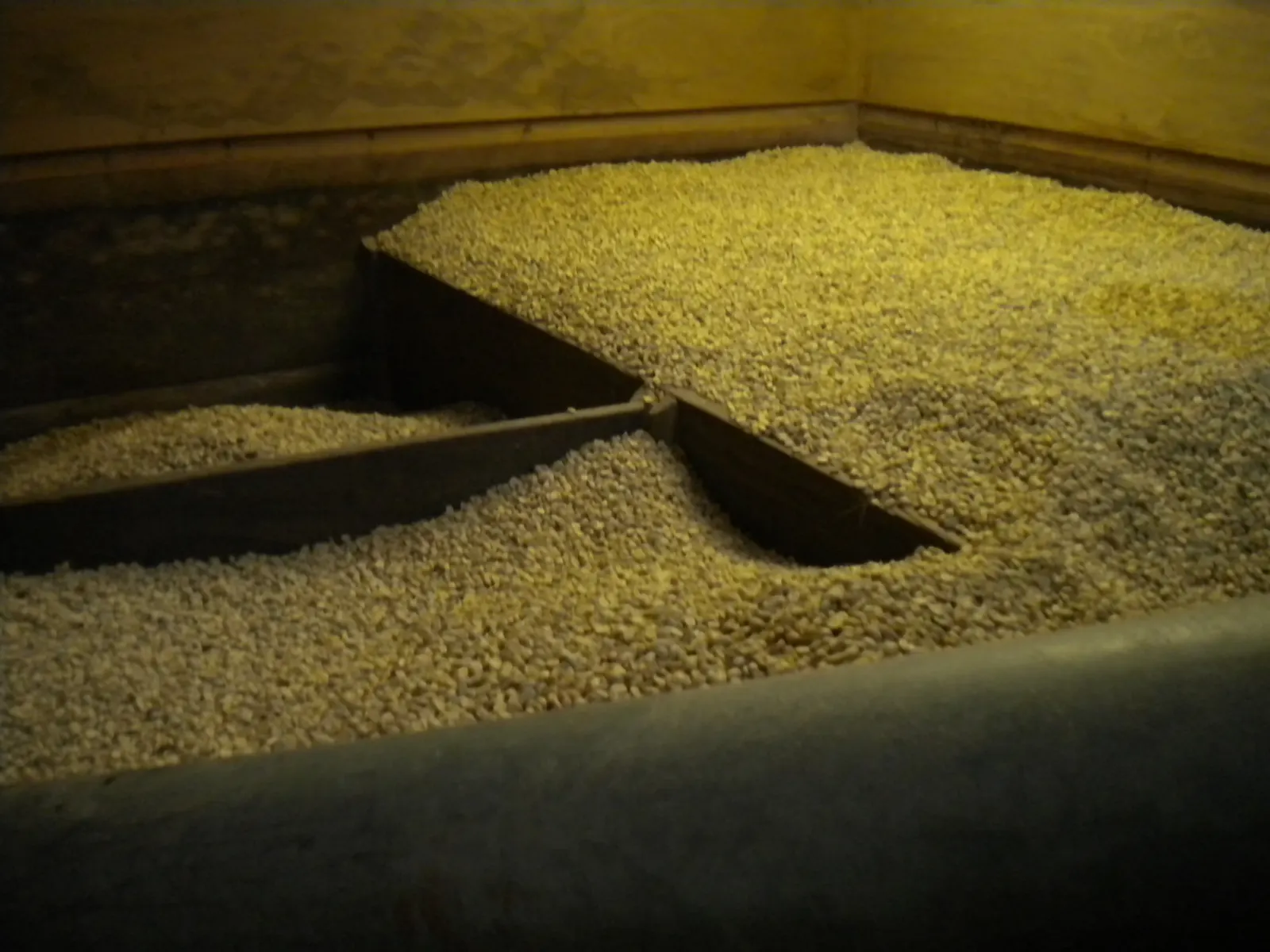
Dry parchment coffee stored in the Culpan warehouse

A mill with history, ecological today

That the Culpan mill dates from the 1940s is part of its value: its facilities hold the family's experience of processing coffee over generations. But tradition does not stand in the way of caring for the environment, and that is why the mill has been updated to be ecological, reducing its impact and making use of the residues of the process.

At Culpan we export green coffee: we do not roast the coffee. Our work ends in a clean green bean, well classified and cupped, ready for the roaster in each market to give it its final expression. In this way we deliver to the world the result of the whole process, true to the idea that patience makes the coffee.

The Mill

The Culpan mill in numbers

1940s
Decade the mill was built
10.5–11.5%
Final coffee humidity after drying
24 h
Resting in tanks after washing
Green coffee
The product we export to the world

Let's talk green coffee

We export high-altitude green coffee, carefully milled. Get in touch to learn more about Culpan coffee.

Contact us